


Your dog just had the best walk of his life. Your floors did not. One enthusiastic romp through a wet paddock and suddenly there are paw prints across the hallway, a damp sofa, and that unmistakable wet dog smell settling in for the season. It happens fast, and without a consistent winter cleaning routine for dogs, it tends to get worse before it gets better.
The good news is that a simple routine at the door makes an enormous difference. You don’t need to deep-clean your entire home every evening. You just need a few good habits in the right order.
Why Winter Specifically Makes Things Harder
Autumn mud is one thing, but winter brings a different set of challenges. Cold, wet conditions mean coats take longer to dry, and damp fur against furniture or carpet creates lingering moisture that leads to mildew smells and skin irritation on your pup.
If you’re in an area that uses road salt or chemical de-icers, there’s another layer to consider. These substances collect on paw pads during walks and can cause cracking, soreness, and irritation if they’re not rinsed off. Your dog will also groom themselves after a walk, which means anything on their paws ends up ingested. That’s worth staying on top of.
It’s also worth noting that short-coated breeds and thick double-coated breeds have very different needs in winter. A Labrador shakes off most of the moisture quickly. A Bernese Mountain Dog, a Chow Chow, or a Husky traps water deep in their undercoat and can stay damp for hours if you don’t actively help them dry. Knowing your dog’s coat type shapes how much time your post-walk routine actually needs.
Set Up a Dedicated Door Station
The single most effective thing you can do is create a space at your entry point that has everything within arm’s reach. When your pup comes in from a winter walk, you want to move through the routine without searching for a towel or stepping over a wet dog to grab supplies.
A basic door station might include a stack of microfibre towels (they absorb far more water than standard towels and dry faster between uses), a small basin or paw-rinsing cup for quick foot soaks, a paw balm or pet-safe moisturiser for dry or cracked pads, and a dedicated mat or drying space where your pup can sit while you work.
Microfibre towels are worth the small investment. They lift moisture from the coat efficiently, and they’re kind to skin, which matters during the colder months when skin tends to be drier. Having a dedicated set just for the dog also means your good towels stay in the bathroom where they belong.
A Practical Post-Walk Routine That Actually Works
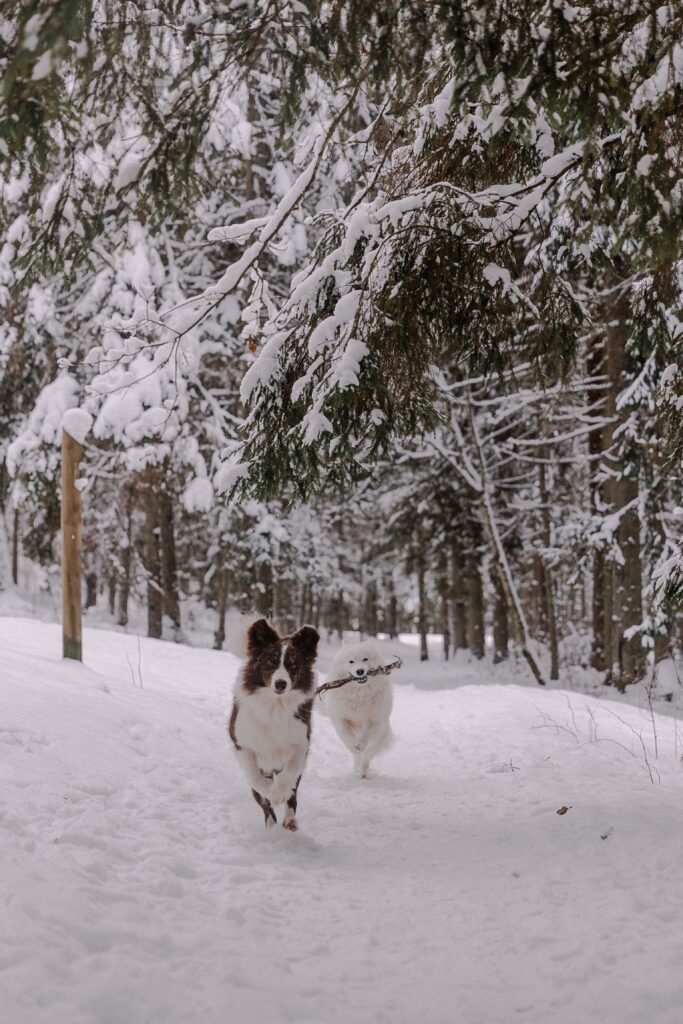
The goal here is speed and consistency, not perfection. A routine you’ll actually follow every time is worth far more than an elaborate one you abandon by week two.
Paws first, always. Lift each foot and check between the toes. Mud and grit collect in the webbing and around the pads, and leaving it there causes irritation over time. A quick rinse in a shallow basin or a gentle wipe with a damp cloth removes most of it in under a minute. If you’ve been walking near treated footpaths or roads, a brief soak is better than a wipe. Pat thoroughly dry afterwards, because moisture sitting between paw pads is a common source of yeast and bacterial issues in winter.
Work through the coat from back to front. Use your microfibre towel in firm, circular motions rather than long strokes. Long strokes move moisture around; circular motions actually lift it. Pay extra attention to the belly, chest, and leg creases, which are the areas that tend to hold the most mud and stay damp the longest.
Check the ears while you’re at it. Dogs with floppy ears are prone to moisture trapping, especially after wet walks. A quick visual check and a gentle dry around the ear flap takes seconds and can prevent issues down the track. If you notice any redness or a smell that wasn’t there before, it’s worth a chat with your vet.
Finish with a quick brush-out. Once the coat is mostly dry, a light brush removes any dried mud or debris you might have missed. For thick or double-coated breeds, this step is especially important. Dried mud left in a dense undercoat mats over time, and matting creates its own set of skin problems.
For Multi-Dog Households: Managing the Post-Walk Rush
If you’ve got more than one dog, the post-walk routine can feel like organised chaos. A few tweaks make it manageable.
Rotate dogs through one at a time if possible. Keeping one pup on a lead near the door while you dry the other reduces the chance of wet dogs charging through the house before you’ve had a chance to intervene.
Having double the supplies helps more than you’d think. Two microfibre towel sets, two mats, two basins means you’re not waiting for one to dry before starting on the next dog. If your entry space is small, a waterproof mat that covers a wider area gives everyone somewhere to stand while you work through the group.
Small Spaces and Apartment Living
A dedicated door station looks different when you’re working with a small entryway or apartment hallway. You don’t need a laundry room or a utility space to make this work.
A compact caddy or a hanging organiser near the front door holds towels, paw balm, and a small rinsing cup without taking up floor space. A waterproof boot tray doubles as a drying mat and catches drips before they reach your floors. Fold-up bowls are a practical alternative to a fixed basin if storage is tight.
The principle is the same regardless of space. Keep everything together, keep it accessible, and do the routine before your pup gets further than the doorway.
Paw Care Deserves Its Own Mention
Paw health in winter often gets less attention than coat care, but it matters just as much. Cold surfaces, road salt, and constant moisture create conditions that dry out and crack paw pads quickly.
A paw balm applied after each clean and dry provides a protective barrier and keeps the skin supple. Look for options formulated specifically for dogs, since human moisturisers can contain ingredients that aren’t safe if licked. Apply it after drying, let it absorb for a minute or two, and then let your pup rest rather than sending them straight back outside.
If your dog is particularly reluctant to have their paws handled, short sessions with plenty of praise and a treat at the end go a long way. Making the routine feel like a positive experience rather than a chore means you’ll get less resistance over time, which makes the whole thing faster and easier for both of you.
When the Routine Becomes Second Nature
The first week of a new winter cleaning routine for dogs always feels like the hardest part. You’re interrupting the natural instinct to just let your pup run inside and collapse on their bed after a good walk. But once the habit is in place, it takes less time than you’d expect, and the payoff is real: cleaner floors, a fresher-smelling home, and a pup whose paws and coat are actually being looked after rather than just towelled at.
Sixty seconds at the door can genuinely save you hours of cleaning later. That’s a trade worth making.