


Your puppy cried all night. You lay awake feeling guilty, wondering if you’d done something wrong. If that sounds familiar, you’re not alone, and you haven’t failed your dog.
Crate training brings up a lot of emotion. Plenty of dog parents come to it reluctantly, worried the crate is unkind or even cruel. Here’s what years of working with dogs have taught us: a crate, introduced the right way, becomes one of the safest places your dog knows. Their own corner of the house. A spot where they settle, rest, and feel genuinely at ease.
This guide walks you through the why, the how, and the mistakes worth avoiding, so you and your dog can get there without too many sleepless nights.
What Is Crate Training?
Crate training is the process of teaching your dog to be comfortable, calm, and relaxed inside a crate, with the door both open and closed. It isn’t about confinement for its own sake. It’s about building an association so positive that your dog chooses the crate on their own.
Done well, the crate becomes three things at once. It’s a rest space, somewhere your dog can retreat when the household gets busy. It’s a house-training tool, because most dogs are reluctant to soil the area they sleep in. And it’s preparation for the rest of life, since a dog who is relaxed in a crate travels better, copes better at the vet, and handles an overnight stay without stress.
You’ll often hear that dogs are den animals and a crate satisfies that instinct. The evidence for that is thinner than it’s usually presented. What’s clearly true is that many dogs, given the choice, gravitate towards small, enclosed, predictable spaces to sleep in. A well-set-up crate offers exactly that, and for a young dog processing an enormous amount of new information every day, a reliable retreat genuinely helps.
Why the Crate Gets Such a Bad Reputation
A lot of the resistance comes from a reasonable place. Nobody wants to shut their dog in a box, and the instinct to resist that is a good one.
The problem isn’t the crate. It’s how it gets used.
Introduced too quickly, used as punishment, or left to sort itself out with a crying dog inside, the crate becomes a source of stress rather than comfort. The dog learns to associate it with isolation and frustration. That’s where the reputation comes from, and it’s deserved in those cases.
Introduced gradually, with patience and positive associations built over time, most dogs come to love it. They wander in unprompted. They nap there with the door wide open. It becomes their quiet spot in a busy house. The difference is entirely in the approach.
Choosing the Right Crate
A crate that’s too large loses the enclosed feeling your dog is after. Too small is uncomfortable and unfair. The general rule is that your dog should be able to stand up, turn around, and lie down comfortably with a little room to spare.
For puppies who’ll grow significantly, a larger crate with a divider panel works well. Move the divider as they grow, and the usable space stays right throughout.
On materials, wire crates offer good airflow and let your dog see what’s going on around them. Fabric crates are lighter and portable, though they suit calmer dogs who won’t test the zips. Plastic travel crates are enclosed on more sides, which some dogs find more settling from the start.
Whatever you choose, cover three sides of a wire crate with a blanket. It’s a small thing that makes a real difference to how quickly a dog settles.
Crate Training Your Puppy Step by Step

There’s no single timeline. Some dogs take to the crate within days; others need a few weeks of gentle, consistent work. What matters is going at your dog’s pace rather than yours.
Step one: Make the crate part of the furniture
Put it somewhere your dog can see it, sniff it, and investigate without pressure. Leave the door open. Toss a few treats or a favourite toy inside and let them find those on their own terms. No pushing, no coaxing past their comfort level. Curiosity does the work.
Step two: Build positive associations
Feed meals near the crate, then gradually move the bowl to the entrance, then further in. Reward any voluntary interaction, whether that’s a sniff at the door, one paw inside, or walking all the way through. Keep sessions short and upbeat, and finish while your dog still feels good about it.
Step three: Add the door, gently
Once your dog moves in and out freely, close the door for a few seconds while they eat or chew. Open it before they finish. Extend the time slowly. Rushing this step is the single most common reason crate training stalls.
Step four: Build duration while you’re present
Before you leave your dog alone in the crate, practise having them settled inside while you move around the house. Sit nearby, then move across the room, then briefly step out of sight and come back. This teaches them that being crated while you’re out of view is safe.
Step five: Overnight and alone time
Once your dog settles comfortably for 30 minutes or more with the door closed, you’re ready for overnight crating or short periods while you’re out. Keep the crate in your bedroom at first if you can. Hearing and smelling you nearby makes a significant difference to how quickly puppies settle through the night.
What Does the 2:1 Rule for Crate Training Mean?
The 2:1 rule is a guideline for structuring a young puppy’s day. For every hour of supervised, structured time out of the crate, which might be short training sessions alternated with walks and play, the puppy gets roughly two hours of rest in the crate. That rest can be sleep or simply calm, quiet wakefulness.
The thinking behind it is that puppies need far more downtime than most people expect. A puppy who is on the go all day, constantly handled and stimulated, never learns to switch off. The 2:1 ratio builds in the rest they need and teaches independence at the same time.
It’s worth treating this as a rest ratio rather than a permission slip. It tells you how to balance activity against downtime within your puppy’s waking day. It does not override the limits below on how long a young dog can physically be shut in. If the two ever conflict, the bladder wins. Some of that rest can also happen in the crate with the door open, or in a pen, which for many households is the more practical version of the same idea.
How Long Can Your Puppy Actually Be Crated?
This is the one to get right. Young puppies have small bladders and limited ability to self-regulate. As a rough guide, a puppy can hold on for about one hour per month of age, with a maximum of four to five hours during the day for most dogs.
Overnight can stretch a little further, since dogs naturally slow their bodily functions during sleep, though very young puppies will still need at least one toilet trip through the night in the early weeks.
Crating for too long is one of the most common mistakes, and one of the most avoidable. Set a timer. Ask someone to help if you’ll be out longer than your dog can comfortably manage. The crate is a rest space, never a substitute for exercise, company, or interaction.
Handling the Whining (Without Losing Your Mind)
Some whining is completely normal. Your dog is telling you this is new and a little uncertain, which is fair enough.
The tricky part is knowing when to respond. If your dog has been outside recently, has eaten, and isn’t in any distress, a bit of grizzling is usually just the adjustment process. Responding to every sound can accidentally teach them that whining opens the door, which makes things harder for everyone.
Genuine distress is different, and you should always respond to escalating panic or cries that suggest a toilet trip is needed. Learning the difference between “I’d rather not be in here” and “I need something” is part of getting to know your individual dog.
If the whining is persistent and your dog seems properly stressed rather than mildly put out, slow right down and go back a step. A few extra days of patience now means a calmer dog later.
What Age Should You Stop Crate Training?
Most dogs are ready for more freedom somewhere between twelve and twenty-four months, once they’re reliably house-trained, past the worst of the chewing phase, and settled enough to be left loose without supervision. Smaller breeds often get there sooner. Larger breeds and slower-maturing types can take longer.
The transition works best in stages rather than all at once. Start by leaving the crate door open overnight. Then try one room with the crate still accessible. Then, for a short period, let them be loose in the house while you’re out, building up gradually the same way you built up crate time in the first place.
A lot of dog parents find they never fully stop. The crate stays in the corner with the door open and the dog keeps using it, because by then it’s simply where they sleep. That’s the ideal outcome, and it’s a good sign you did the early work well.
Common Mistakes in Crate Training
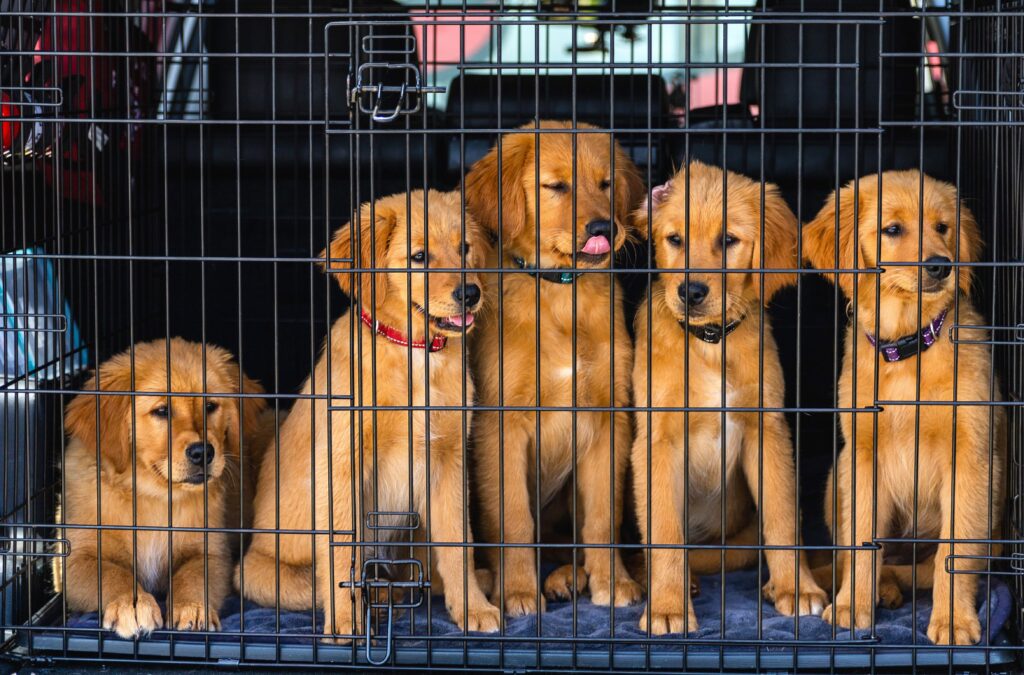
Most crate training problems trace back to a handful of things, and all of them are fixable.
Moving too fast
Closing the door before your dog is genuinely comfortable going in, or leaving the house before they’ve settled with you present, is the most frequent one. Every step above depends on the one before it.
Using the crate as punishment
Sending your dog to the crate after they’ve chewed something undoes weeks of work. The crate needs to mean good things, consistently.
Leaving them in too long
Covered above, and worth repeating because it’s the mistake most likely to create a dog who genuinely fears the crate.
Letting them out mid-protest
Opening the door while your dog is whining teaches them that whining works. Wait for a pause, however brief, then open it.
Making a production of arrivals and departures
Long emotional goodbyes and excited greetings raise the stakes. Keep both low-key and the crate stays unremarkable.
Skipping the physical and mental exercise
A dog with unmet needs won’t settle in a crate no matter how good the training is. The crate manages rest, not energy.
A Note for Owners With Rescue Dogs
If your dog has come from a difficult background, crate training may take longer and need more patience. Some rescue dogs have had bad experiences with confinement, and that history can show up as fear, panic, or shutting down completely.
Go slower than the steps above suggest and let your dog set the pace entirely. Build trust more broadly before introducing the crate at all. If your dog shows significant distress, speak to a qualified trainer or your vet before continuing. Some dogs genuinely do better with alternative management approaches, and recognising that isn’t a failure.
What Great Socialisation Does for Crate Training
A dog who is well-exercised, well-socialised and properly tired settles into a crate far more easily than one whose needs haven’t been met.
A dog who’s been on a farm run, spent the day with well-matched mates, and come home pleasantly worn out doesn’t need to pace or whine. They want to rest. The crate stops being an imposition and becomes the obvious place to do it.
It’s one of the reasons so many dogs at K9 Heaven come home and head straight to their crate. A full day has a way of making rest feel like a reward.
If you’re working out how to build that kind of routine into your dog’s week, our doggy daycare is worth a look. Your dog gets a big, sociable day with the pack, and you get a calm evening at home.
Giving It Time
Crate training tests your patience. There will be nights where you second-guess yourself, and that’s not a sign you’re doing it wrong.
The dog parents who get there are the ones who stay consistent, stay kind, and resist the urge to rush. A crate introduced gently becomes something most dogs genuinely value: a place that’s theirs, that feels safe, and that gives them the settled rest they need.
If you’d like a hand along the way, our team at K9 Heaven is always happy to talk it through.